Residential Concrete Patios for Busy Households
Request a patio estimate
A concrete patio is a long-term part of your yard. It holds up furniture, grills, kids, and weather. When the old slab cracks, sinks, or holds water, it is time to plan a replacement or a new build.
Conventionalways Concrete is a referral service. We do not pour or finish concrete. We take your request and connect you with an independent provider in our network who serves the Chicago area. The provider visits, measures, and gives you a written quote. You decide if it fits your budget and your family's schedule.
First, Spot It: Signs Your Patio Needs Work
Small problems on a slab grow fast. Frost, spring runoff, and summer storms all push on concrete. Catching the early signs gives you more choices and a calmer schedule.
Use this quick check:
- Hairline cracks that now run across the slab
- One section sitting higher or lower than its neighbor
- Flaking or rough, crumbling surface
- Water that pools after rain instead of draining away
- A gap opening between the patio and the house wall
If you tick two or more, start planning. Some surface wear can be fixed. A badly sunken or broken slab often needs a full replacement.
Why Timing Matters in Cold Climates
Water gets into small cracks. When it freezes, it expands and widens the crack. Deep frost can lift and shift a slab by the next thaw. Hot, humid summers and hail add more wear. A patio that looks tired in fall may be in rough shape by spring.
Why Homeowners Choose Concrete
Concrete is a common pick for good reasons.
- It is firm and flat for tables, chairs, and grills.
- It can be shaped to nearly any outline.
- It takes color, texture, and stamped patterns.
- It needs little upkeep when it is built well.
It also suits many home styles, from older frame houses to bungalows and ranch homes. The patio can sit right at your back door level, which keeps steps and tripping spots to a minimum.
What a New Patio Project Includes
Projects vary by provider and by yard. Most follow this order:
1. Site walk and measuring 2. Written quote and schedule 3. Removing the old slab, if there is one 4. Grading and a compacted base 5. Forms, and reinforcement where the provider calls for it 6. Pouring and finishing the concrete 7. Cutting joints so cracks follow neat lines 8. Curing, then sealing if you choose it
Ask the provider to list each step in the quote. Clear lines make it easier to compare offers.
Sizing Your Patio
First, picture how you will use the space. Then measure what that needs.
- A small table for two needs roughly 8 by 10 feet.
- A table for six with a grill often needs 12 by 16 feet or more.
- Add room to push chairs back without stepping off the slab.
Mark the outline with a garden hose or spray paint. Leave it for a few days. Walk it with a chair and a plate of food. Adjust before anyone pours.
Finish Options
The finish changes both the look and the grip underfoot. Ask for small sample boards.
Broom Finish
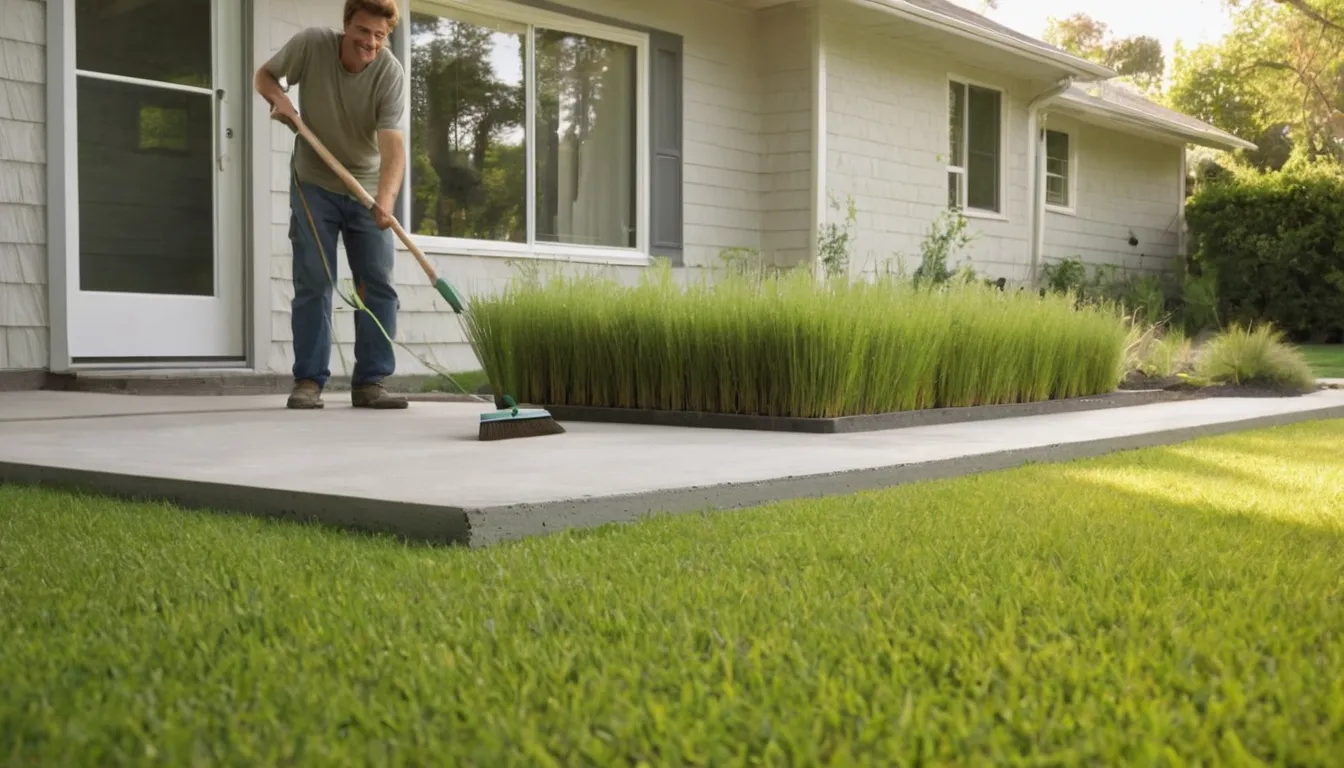
A light broom texture is plain and slip-resistant. It is a common choice for wet climates.
Stamped Concrete Patios
Stamped concrete patios use patterns that mimic stone, brick, or wood. Color is added in the mix or on the surface. This takes more skill and often costs more than a plain slab.
Exposed Aggregate and Colors
Exposed aggregate shows small stones in the surface. Integral color gives a steady tone through the slab. Both hide minor dirt well.
Drainage and Your Foundation
Water is the main enemy of any slab. A patio should slope gently away from the house, usually about a quarter inch per foot. Many homes have full basements with sump pumps, so water that drains toward the wall can add load to the pump.
Check the Ground First
Look for pooling near the foundation, damp basement walls, or gaps at the patio edge. If you see signs of a shifting foundation, bring in foundation repair experts before new concrete goes down. A fresh slab over a moving wall just hides the problem.
Plan the Runoff
Ask your provider where the water will go during spring flooding and heavy thunderstorms. A drain, a swale, or a slight regrade may be part of the plan.
Plan Around Life
Busy households need a schedule that works. Share these details up front:
- School runs, work hours, and nap times
- Pets that need a safe, closed-off space
- Where cars and bins must stay reachable
- Any events coming up
Most patio jobs take a few days of active work, plus curing time. Fresh concrete must stay clear of feet and paws until it sets. Ask the provider for a day-by-day outline.
Choosing a Concrete Provider
Compare at least two written quotes. Look at the scope, not only the total.
- Does the quote list base prep, thickness, and joint plan?
- Does the provider carry insurance and any license your area requires?
- Can they show recent concrete flatwork like patios and walks?
- Is the payment schedule clear?
If you also have a cracked drive, concrete driveway repair is a different job. Mention it so the provider can look at both.
Caring for Your New Patio
Care is simple if you do it on a schedule.
1. Keep traffic off until the provider says it is ready. 2. Seal the surface when recommended, often after curing. 3. Sweep and rinse the slab each season. 4. Clean spills quickly, especially grease and oil. 5. Avoid harsh de-icing salts in the first winter.
Check the slab each spring for new cracks. First, spot it. Then fix small things before they grow.
What's Included
Site Walk and Measuring
The provider visits, checks slope and soil, and measures the area for an accurate written quote.
Old Slab Removal and Base
Worn concrete is broken out, then the ground is graded and compacted to support the new slab.
Forms, Pour, and Finish
Forms set the shape, concrete is poured, and the surface is finished as you chose.
Joints and Curing
Control joints guide cracking, and curing time lets the slab gain strength before use.
Typical Patio Costs in the U.S.
Prices vary by region, slab size, soil, access, and finish. These are typical U.S. ranges only, not quotes. Ask each provider for a written quote that lists every line item.
| Item | Typical range | Notes |
|---|---|---|
| Plain broom-finish slab | $6 – $12 per sq ft | Simple shapes cost less |
| Stamped concrete patio | $12 – $25 per sq ft | Pattern and color raise the price |
| Exposed aggregate finish | $9 – $18 per sq ft | Skilled finishing needed |
| Old slab removal | $2 – $6 per sq ft | Depends on thickness and haul-away |
| Base prep and grading | $1 – $4 per sq ft | Poor drainage adds work |
| Sealer | $1 – $3 per sq ft | May need reapplying over time |
How It Works
Send Your Request
Tell us about your yard, the size you want, and any signs of damage on the old slab.
Get Matched Locally
We refer you to an independent provider in our network who serves your area.
Review the Written Quote
The provider visits, measures, and sends a quote. Compare scope, timing, and price.
Schedule Around Life
Pick dates that fit your household, then follow the provider's curing and care notes.
Why Call Conventionalways Concrete
Clear Steps in Order
You get plain first, next, then guidance so the project never feels like a mystery.
Early Signs
We point out warning signs so you can plan before small cracks become big jobs.
Honest Referrals
Conventionalways Concrete connects you with independent providers. They do the work, set the prices, and give the quote.
Low Disruption
Share your family schedule and ask providers to plan the work around daily life.
Other Services
Need residential concrete patios in Chicago?
Tell us what you are planning. Request a callback to check provider availability, or send a request and a local provider will follow up.
No obligationResidential Concrete Patios FAQ
How long does a new concrete patio last?
A well-built concrete patio can last for decades. Good base prep, proper drainage, and joint placement matter most. Cold winters and de-icing salts can shorten that, so sealing and yearly checks help.
How soon can I use a new concrete patio?
Most providers ask you to stay off for a few days and keep heavy items off for about a week or longer. Follow your provider's advice, since weather affects curing.
Is a stamped concrete patio worth the extra price?
It can be if you want a stone or brick look with less upkeep than real pavers. It costs more than a plain slab, so ask providers for samples and a written quote.
Reach a local provider
Tell us what you are planning. Request a callback to check provider availability, or send a request and a local provider will follow up.
No obligation